When expectant mothers consume sufficient amounts of the nutrient choline during pregnancy, their offspring gain enduring cognitive benefits, a new Cornell study suggests.
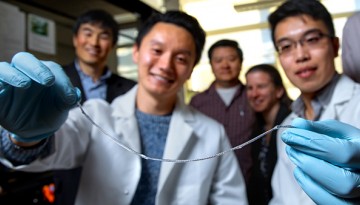
In an example of cross-campus collaboration, a group led by Minglin Ma has developed a unique implant for controlling type 1 diabetes, which affects more than 1 million Americans.
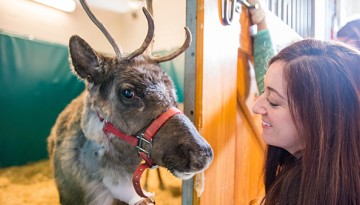
Veterinarians at the Cornell University Equine and Nemo Farm Animal Hospital saved the life of a reindeer, named Little Buddy, with help from his brother, Moose.
President Martha E. Pollack has committed the university to a new multi-institution initiative to make public data pertaining to career outcomes for life sciences doctoral students and postdoctoral researchers.
Cornell engineers have demonstrated a method for gathering vital signs using a cheap and covert system of radio-frequency signals and microchip "tags."
Avery August, professor of immunology in the College of Veterinary Medicine and incoming vice provost for academic affairs, has been named a Howard Hughes Medical Institute professor.