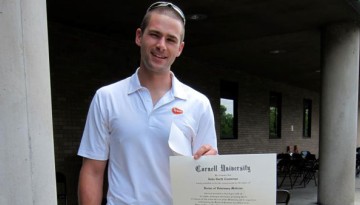
The Garth Cummings, D.V.M. ’11, and Sons Externship honors the memory and values of the alumnus, who lived a life of adventure and dedication to sound animal agriculture.
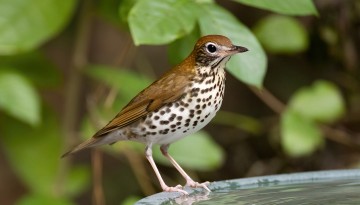
For the first time, people around the world, including conservationists, can zoom in to within an 8-mile radius to see exactly where each of 586 bird species is increasing or decreasing – providing localized insights needed to restore rapidly declining bird populations and habitats.
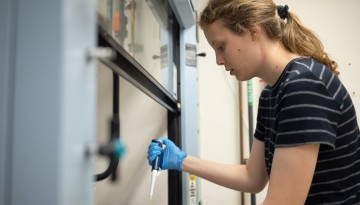
Yingzheng (Jason) Wang and Misha Kazi are the 2022 recipients of the Fleming Research Fellowships, which support young researchers who are doing cutting-edge work in basic biomedical sciences and are planning careers in biological or medical research.
Consumers would be willing to buy milk from cows only treated with antibiotics when medically necessary – as long as the price isn’t much higher than conventional milk, according to researchers at the College of Veterinary Medicine.
A Cornell team has developed a way to spatially map the entire spectrum of RNA in a cell’s transcriptome, revealing the role of previously elusive RNA in skeletal muscle regeneration and viral myocarditis in mice.