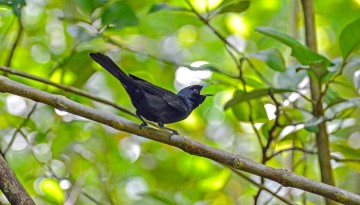
Two populations of flycatchers that evolved on different remote islands separately developed the same trait – all-black feathers – according to a new study that used machine learning to understand the process that shaped the birds’ genome.
The Eclectic Convergence conference included talks from six entrepreneurs, business executives and venture capitalists, as well as a pitch competition.
Viral DNA in human genomes, embedded there from ancient infections, serve as antivirals that protect human cells against certain present-day viruses, according to new research.
Cornell has been selected to join the Schmidt AI in Science Postdoctoral Fellowship, a program of Schmidt Futures, to accelerate the next scientific revolution by applying artificial intelligence to research in science, technology, engineering and mathematics.
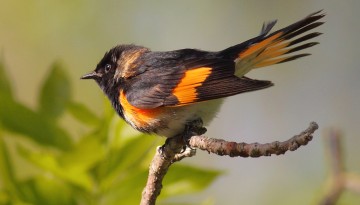
Birds attracted by the glow of artificial light at night are drawn into areas where they are also exposed to higher concentrations of airborne toxic chemicals, according to a study from the Cornell Lab of Ornithology.
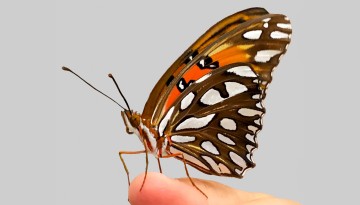
Butterfly wing patterns have a basic plan to them, which is manipulated by non-coding regulatory DNA to create the diversity of wings seen in different species, according to new research.
A new project from the Tata-Cornell Institute for Agriculture and Nutrition (TCI) aims to estimate the true cost of the PDS by accounting for hidden costs like the health and environmental impacts of the program.
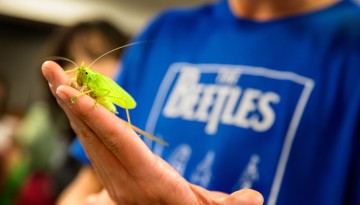
Cornell entomology students and faculty are pulling out all the stops for the 17th annual festival, which returns after pandemic-related cancellations the last two years.