In a large-scale effort to reduce human infectious diseases and conserve human and animal life, researchers have collated and reviewed the evidence for 46 solutions that aim to advance the United Nations’ Sustainable Development Goals.
The Cornell Veterinary Educators Academy held its inaugural conference, “Professions, Professionals and Professional Identity,” virtually Aug. 10 and 11.
A new study finds that certain species of bacteria in the gut interact with and help balance levels of dietary cholesterol by using it to create a molecule that plays important roles in human health.
A world leader in the study of population genetics of the fruit fly, Aquadro studies the amount of diversity that exists within and between the genomes of organisms.
Dr. Bruce Kornreich, D.V.M. ’92, Ph.D. ’05, director of the Cornell Feline Health Center, is a featured expert on “Inside the Mind of a Cat,” a documentary premiering Aug. 18 on Netflix.
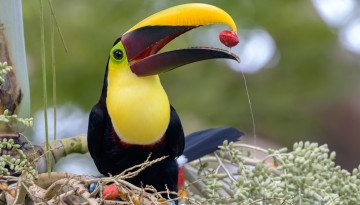
Birds living in tropical mountains have narrow ranges. Why not make use of the whole mountain? A new study finds the dominant influence for their choice has to do with the neighbors.
Nix, a miniature donkey with a potentially fatal heart condition, is on the mend after a successful pacemaker implantation by veterinarians at the Cornell University Hospital for Animals – the first surgery of its kind in a large animal species at Cornell.
From Ithaca to Hawaii to Ecuador, students in the Robert S. Harrison College Scholars Program in the College of Arts & Sciences took advantage of the summer as a time to explore their research interests.