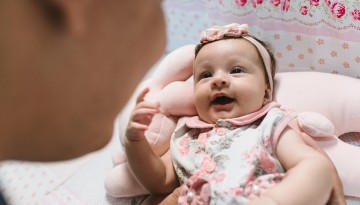
In a new study, Cornell psychology researchers have found that babies learn their prelinguistic vocalizations – coos, grunts and vowel sounds – change the behaviors of other people, a key building block of communication.
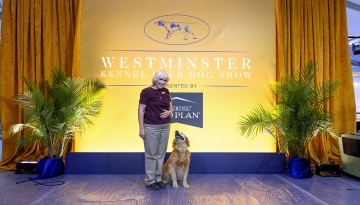
Lisa Mitchell, a licensed veterinary technician with the College of Veterinary Medicine, brought her golden retriever to compete at this year’s Westminster Kennel Club Dog Show, where CVM representatives provided on-site care for the elite breeds.
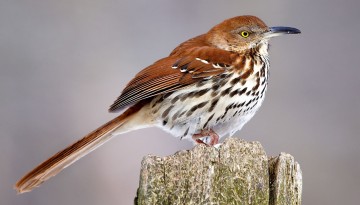
The free machine-learning powered tool can identify more than 3,000 birds by sound alone, generates reliable scientific data and makes it easier for people to contribute citizen-science data on birds by simply recording sounds.
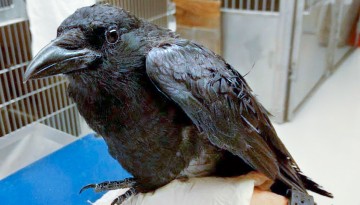
Researchers tracked the crows’ immune response while in the hospital, finding that the birds shed the virus in respiratory secretions for at least 93 days after being infected.
At NextGen Cassava, together with partners IITA and NRCRI in Nigeria, TARI in Tanzania and NaCRRI in Uganda, Tufan and the Survey Division team are breaking down research silos by integrating data sets between plant breeders, economists and gender specialists.
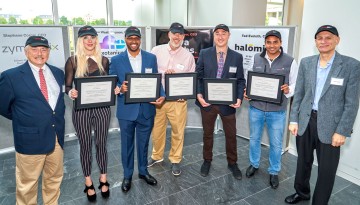
As the pandemic pomp and COVID circumstances dissipate, Cornell’s McGovern Center and Praxis Center incubators graduated five startups, putting them on the road to success.
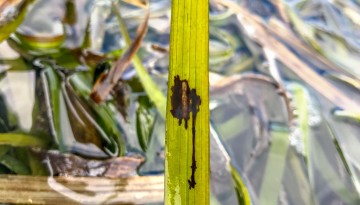
A combination of ecological field methods and AI has helped an interdisciplinary research group detect eelgrass wasting disease from San Diego to southern Alaska, and determine that it’s caused by warmer-than-normal water temperatures.