Seven Cornell research teams have received Center for Advanced Technology grants to advance early-stage life science technologies through collaborations with biotechnology companies across New York state.
The 3,681 first-year students and 603 transfers who begin moving to campus Aug. 17, hail from 49 states plus Washington, D.C., Puerto Rico and American Samoa, and 62 countries.
Through a partnership between Cornell’s School of Continuing Education (SCE) and 4‑H, high school students from across New York state receive scholarships to Cornell’s Precollege Studies program and take Cornell courses for credit on campus or online during the summer.
Researchers and extension staff translated complex research into a hands-on curriculum – including the construction and deployment of floating robots – for New York State teachers and their students.
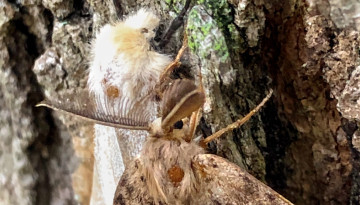
Satellite-derived maps of defoliation caused by European spongy moths offer a promising solution for tracking pest outbreaks and for identifying large scale trends.
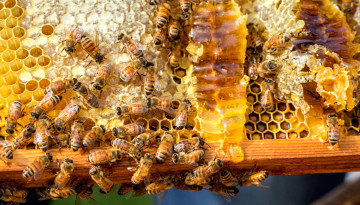
Strict regulations have prevented continental U.S. beekeepers from participating in the lucrative organic honey market, but new findings could provide evidence to open organic markets to U.S. producers.
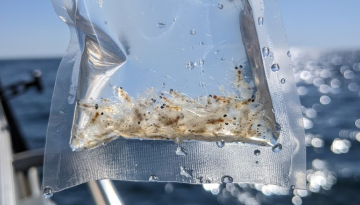
Cornell University’s James Watkins and Kade Keranen are leading a nearly $240,000 study to examine the abundance of mysid, small, shrimp-like crustaceans that are critical links in Lake Ontario’s aquatic food web.
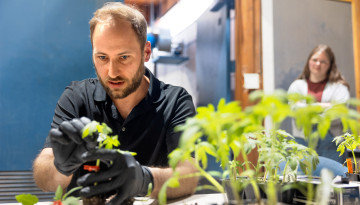
Across 37 counties, Cornell Cooperative Extension master gardeners are growing and evaluating select vegetables to find what grows best in New York state.