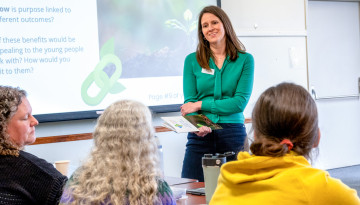
The Program for Research on Youth Development and Engagement at the Bronfenbrenner Center is helping youth educators understand how to foster a sense of purpose in the young people they serve.
Alexander Colvin, Ph.D. ’99, will serve on a blue-ribbon commission charged with developing recommendations on how New York state can protect workers’ economic security while harnessing the economic benefits of AI.
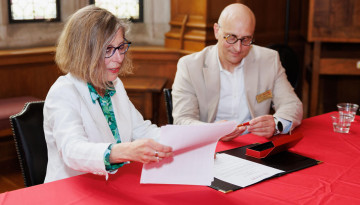
Cornell University’s School of Continuing Education (SCE) and SUNY Broome Community College signed an articulation agreement that creates a direct transfer pathway into Cornell’s new online Bachelor of Professional Studies degree, strengthening both institutions’ commitments to expanding educational access for New York learners.
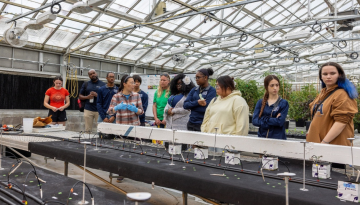
Students from Buffalo's McKinley High School — home to one of the few high-school horticulture programs in New York state — visited Cornell May 19 to view the work of the Center for Research on Programmable Plant Systems (CROPPS).
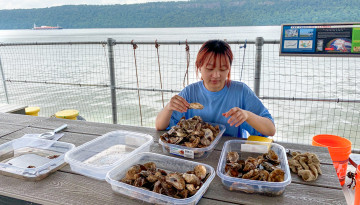
A new study offers genetic evidence and proof that farmed eastern oysters are adding to and breeding with wild eastern oyster populations in the western and central Long Island Sound.
The group of 50 scholars will talk about how to build an undergraduate educational experience that crosses both disciplinary boundaries and institutional lines.
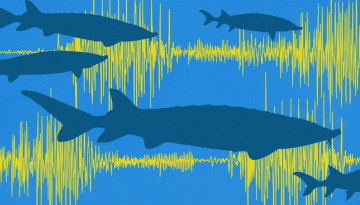
The finding gives New York state another tool to locate and understand the behavior of the endangered Atlantic sturgeon, an iconic species decimated by overfishing.