A project funded by a 2017 grant from the provost’s Active Learning Initiative has resulted in calculus students and instructors seeing academic benefits, and a path to more consistently active pedagogy.
The National Science Foundation has renewed its funding for the Cornell NanoScale Science and Technology Facility with a five-year, $7.5 million grant.
Applications are being accepted through Oct. 15 for the second cohort of the Klarman Postdoctoral Fellowship program, in the College of Arts and Sciences.
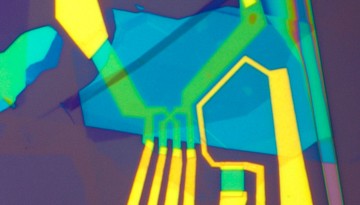
Cornell researchers used an ultrathin graphene “sandwich” to create a tiny magnetic field sensor that can operate over a greater temperature range than previous sensors, while also detecting miniscule changes in magnetic fields that might otherwise get lost within a larger magnetic background.
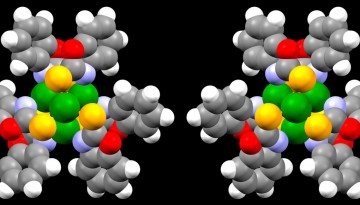
Cornell researchers discovered a way to bind and stack nanoscale clusters of copper molecules that can self-assemble and mimic complex biosystem structures at different length scales.
Ray Jayawardhana, the Harold Tanner Dean of Arts and Sciences and professor of astronomy, has been awarded the 2020 Carl Sagan Medal by the Division for Planetary Sciences of the American Astronomical Society.
Peter McMahon, assistant professor of applied and engineering physics in the College of Engineering, and Brad Ramshaw, the Dick & Dale Reis Johnson Assistant Professor of physics in the College of Arts and Sciences, have been named CIFAR Azrieli Global Scholars.
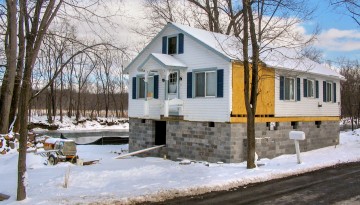
In flood-prone areas of the Hudson River valley in New York state, census areas with more white and affluent home owners tend to file a higher percentage of flood insurance claims than lower-income, minority residents, according to a new study.
New York City residents are four times more likely to choose a store where shoppers respect 6 feet of distancing than one where no one is social distancing, according to a Cornell experiment using 3D simulation.