Seven postdoctoral researchers at Cornell were honored with a Postdoc Achievement Award as part of Cornell’s celebration of National Postdoc Appreciation Week, Sept. 21-25.
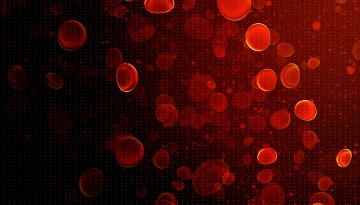
Researchers led by Nicholas Abbott, a Tisch University Professor in the Robert F. Smith School of Chemical and Biomolecular Engineering, created a way of using synthetic liquid crystals to squeeze red blood cells and gain new insight into individual cells’ mechanical properties.
Internationally renowned physicist, human rights champion and Soviet-era dissident Yuri Orlov, professor emeritus of physics in the College of Arts and Sciences, died Sept. 27 in Ithaca. He was 96.
Arthur Ashkin, Ph.D. ’52, who won the Nobel Prize in physics in 2018 for pioneering “optical tweezers” that use laser light to capture and manipulate microscopic particles, died Sept. 21 at his home in Rumson, N.J. He was 98.
Graduate students in six fields of study have designed an evolution lesson on speciation for undergraduate non-majors that applies active-learning techniques. The lesson was published in CourseSource.
Cornell engineers have developed a new framework that makes the design of stretchy elastomers a modular process, allowing for the mixing and matching of different metals with a single polymer.
Cornell Engineering has established the Lance R. Collins Fellowship, created to support engineering graduate students from traditionally unrepresented populations, as well as honor its former dean of 10 years.
The Braudy Foundation – founded by Bob Braudy ’65, M.Eng. ’66, and his wife, Judi – has committed to funding a second five-year phase of a research collaboration between Cornell and Northern Arizona University.