Researchers successfully engineered E. coli bacteria to produce O-linked glycoproteins – research that will illuminate the complex process of glycosylation and the role that protein-linked glycans play in health and disease.
As scientists prepare to study Martian soil for signs of life, a new worry emerges. Acidic fluids once on Mars’ surface may have destroyed biological evidence hidden within the planet’s iron-rich clays.
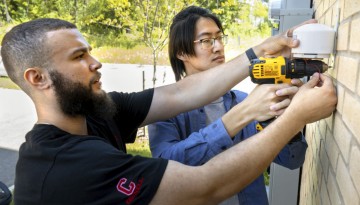
The NSF has awarded $1.5 million to Cornell engineers to help bridge New York’s digital divide by designing the nation’s first statewide Internet of Things public infrastructure.
Around campus academic quads and residential areas, in the thick of autumn’s red and yellow leaves, soon there’ll be something green: a new tool-toting, solar power-generating trailer.
Twenty faculty members from eight colleges have been named Engaged Faculty Fellows, committed to advancing community-engaged learning and scholarship at Cornell and within their academic disciplines.
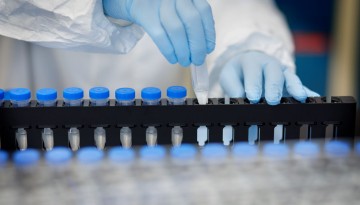
The aggressive approach, which supplements other campus efforts to slow the virus’s spread, expands testing to those who may not meet the definition of a close contact.
Two Cornell economics researchers have received a three-year grant from the National Science Foundation to study the long-term effects of active learning and online instruction.
This year’s 76West Clean Energy Competition featured three Cornellian-led startups that could potentially generate economic development in the Southern Tier with clean-energy technology.
A Cornell-led collaboration has created the first microscopic robots that incorporate semiconductor components, allowing them to be controlled – and made to walk – with standard electronic signals.