To better predict volcanic activity, Cornell geologists have proposed a new system to discern the stages of a volcano’s unrest – as seen from perceptive satellites.
Cornell will have connections to three of this year’s eight winners of 51 Pegasi b Fellowships in Planetary Astronomy. Two are coming to Ithaca for three years of postdoctoral work; another is a recent Cornell graduate.
Cornell astronomers have created five models representing key points from our planet’s evolution to use as spectral templates in the hunt for Earth-like planets.
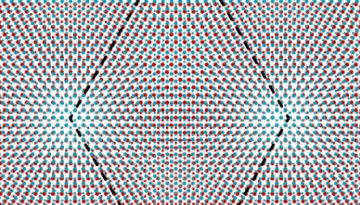
A Cornell-led collaboration has created a model simulator from overlapping ultrathin monolayers and have used it to map a longstanding conundrum in physics.
Ray Jayawardhana, the Harold Tanner Dean of the College of Arts and Sciences and a professor of astronomy, hopes to inspire the next generation of scientists with his first book for young children, “Child of the Universe.”
A collaboration led by Lawrence Bonassar developed a two-step technique to repair herniated discs so they maintain mechanical function and won’t collapse or deteriorate.
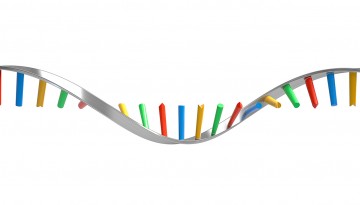
A Cornell research team led by Ben Cosgrove used a new cellular profiling technology to probe and catalog in a “muscle regeneration atlas,” the activity of almost every possible kind of stem cell involved in muscle repair.
Yunyun Wang ’20, a double major in the College of Arts and Sciences and in the College of Engineering, has been named a Newman Civic Fellow by Campus Compact, a national coalition committed to the public purposes of higher education.