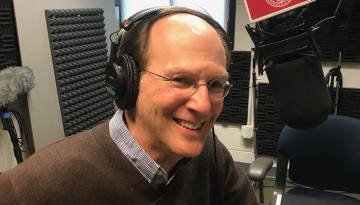
Steven Strogatz, the Jacob Gould Schurman Professor of Applied Mathematics, hosts a new podcast series for Quanta Magazine called “The Joy of x” in which he interviews scientists and mathematicians about their lives and work.
Six of the world’s most promising early-career scholars are recipients of the inaugural three-year Klarman Postdoctoral Fellowships, in Cornell’s College of Arts and Sciences.
Cornell’s newest science communications vehicle is “Modified,” a retrofitted, retro-vibe food truck that serves modified munchies with a side of biotechnology knowledge.
Faculty members Anthony Burrow and Julia Felippe, Ph.D. ’02, have been appointed provost’s fellows for public engagement, to advance Cornell’s public engagement mission and initiatives around community-engaged learning and research.
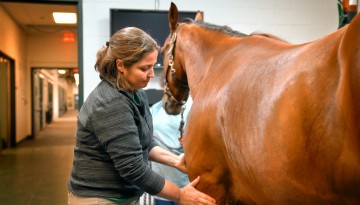
Recent multidisciplinary research at Cornell, led by Dr. Michelle Delco from the College of Veterinary Medicine, reveals that the application of a proprietary peptide may protect cartilage from osteoarthritis.
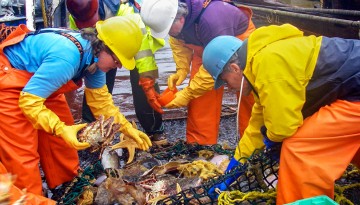
A new collaboration between the Cornell Atkinson Center for Sustainability and The Nature Conservancy this year will fund three studies that could be significant in the face of climate change.
Using cryo-electron microscopy, assistant professor Liz Kellogg has made recent discoveries that add to our knowledge of Alzheimer’s disease and the fundamental mechanisms of DNA recombination.