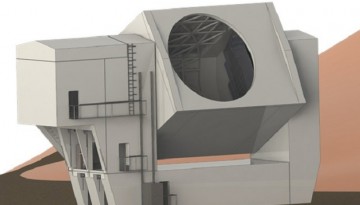
Due to the COVID-19 pandemic, the inaugural CCAT-prime telescope collaboration meeting, April 7, was switched to a virtual gathering, but science regarding the project advanced.
The next generation of Earth- and space-based telescopes will be able to hunt distant solar systems for evidence of life on Earth-like exoplanets, thanks to a new spectral field guide.
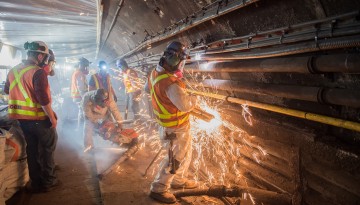
New York City’s L train has resumed full service following an extensive rehabilitation project that finished six months early and $100 million under budget, thanks in part to Cornell engineers.
Cornell mathematicians are using game theory to model how the competition between cancer cells can be leveraged, so cancer treatment – which takes a toll on the patient’s body – might be administered more sparingly, with maximized effect.
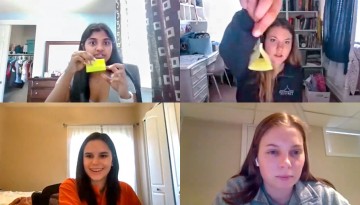
The coronavirus pandemic has forced Cornell instructors to rethink how they teach lab classes, as remote learning has created special challenges for courses considered more hands-on, collaborative and experiential.
Lisa Kaltenegger, associate professor in the astronomy department and director of the Carl Sagan Institute, will give the Fred Kavli Plenary Lecture at the American Astronomical Society virtual meeting.
To address the plastic environmental crisis, Cornell chemists have developed a new polymer for a marine setting that is poised to degrade by ultraviolet radiation.