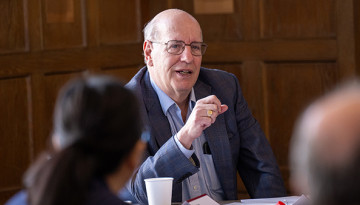
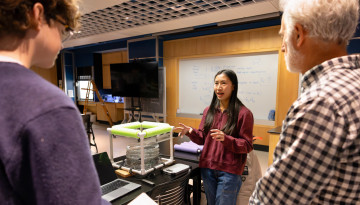
President Michael I. Kotlikoff and professors Olga Boudker, Cathy Caruth and Francesca Molinari have been recognized by the honorary society for their excellence and leadership.
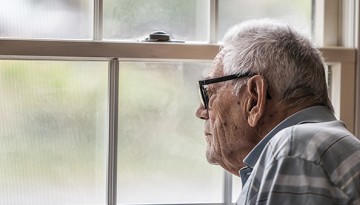
Caring for a family member with dementia can feel like losing a loved one who is still alive, but a new study suggests that revisiting memories together through a simple digital tool can help ease that grief.
Research from Cornell Tech shows that before big tech engineers can improve the fairness of recommendation systems they need to define what “fairness” even means.
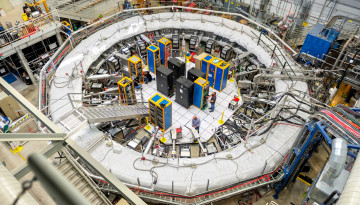
Lawrence Gibbons, professor of physics in the College of Arts and Sciences, is among the researchers awarded the prestigious physics prize for his muon g-2 collaborations.
Harry Katz, the Jack Sheinkman Professor of Collective Bargaining at the School of Industrial and Labor Relations, was honored at a conference the weekend of April 11-12 as fellow scholars, colleagues and mentees presented papers that draw on his work by extending the context in which his insights are applied, his methods used and theoretical assumptions made.
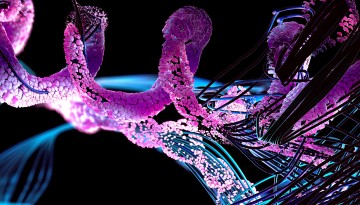
Weill Cornell Medicine investigators have revealed the detailed workings of a cell membrane protein; the discovery could lead to new therapies for blood coagulation disorders, cancers and other conditions.
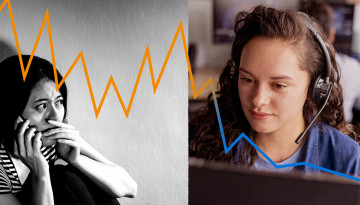
Behavioral health clinicians at 911 call centers answer mental health and substance abuse calls, enabling police officers to spend more time focusing on public safety.
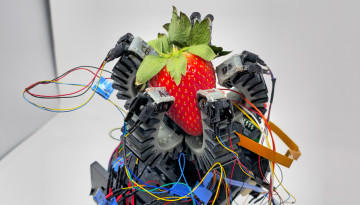
Cornell researchers used stretchable fiber-optic sensors to create a soft robot gripper that can predict the ripeness of strawberries by touch, then pick them without causing any damage.