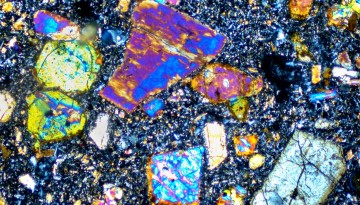
A new study co-led by a Cornell researcher has identified serpentinite – a green rock that looks a bit like snakeskin and holds fluids in its mineral structures – as a key driver of the oxygen recycling process.
Weill Cornell Medicine has received a $1.27 million grant from the United States Department of Defense to develop treatment for a rare but devastating eye condition largely affecting military personnel who suffer traumatic eye injuries in combat.
A computational tool will greatly benefit our understanding of the SARS-COV-2 virus and the development of drugs that block sites where the virus binds with human proteins.
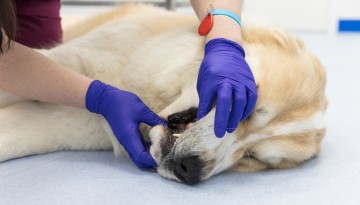
Recent Cornell research compared the profiles of a nonlethal canine tumor and the rare, devastating human oral tumor it resembles, laying the groundwork for potential translational medicine down the road.
Being overly positive about new tech is a type of response bias – a hazard of all studies involving people, where participants give less than accurate reactions, whether consciously or unconsciously.
Cornell researchers have developed an innovative technique to track microbes and understand the various ways they process soil carbon, findings that add to our knowledge of how bacteria contribute to the global carbon cycle.
New research co-authored by Esteban Gazel, associate professor of earth and atmospheric sciences, connects the geochemical fingerprint of the Galápagos plume with mantle materials 900 miles away, underneath Panama and Costa Rica.
The Cornell Assistantship for Horticulture in Africa, a program that brings master’s students from sub-Saharan Africa to Cornell to complete doctorate degrees in horticulture, has now added a second assistantship for African Americans.
Derrick Spires will talk about “Defining Democracy: How Black Print Culture Shaped America, Then and Now” Dec. 1 in a Society for the Humanities webcast hosted by eCornell.