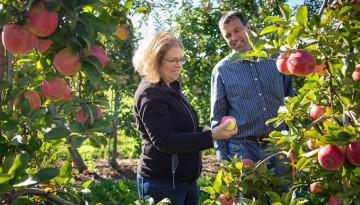
Jenna Hershberger and Ella Taagen, doctoral candidates in plant breeding, are among 10 graduate students nationwide who’ve been selected as National Association of Plant Breeders Borlaug Scholars.
Twenty faculty members from eight colleges have been named Engaged Faculty Fellows, committed to advancing community-engaged learning and scholarship at Cornell and within their academic disciplines.
Scientists have detected signs of a frog listed extinct and not seen since 1968, using an innovative technique to locate declining and missing species in two regions of Brazil.
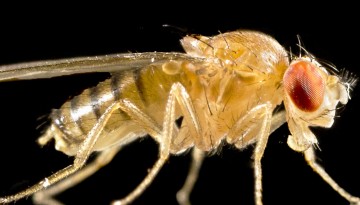
Two Cornell research teams, studying crop viruses and insecticides’ physiological effects on insects, have received grants totaling nearly $900,000 from the U.S. Department of Agriculture’s National Institute of Food and Agriculture.
Two Cornell economics researchers have received a three-year grant from the National Science Foundation to study the long-term effects of active learning and online instruction.
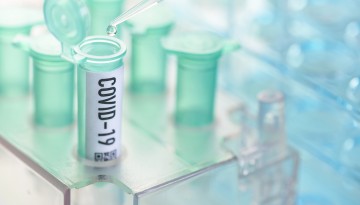
Research from the Feschotte Lab identifies 28 new SARS-CoV-2 and coronavirus associated receptors and factors that predict which tissues are most vulnerable to infection.
This fall, apple lovers can look forward to three new varieties from the oldest apple breeding program in the U.S. — located at Cornell AgriTech in Geneva, New York, part of the College of Agriculture and Life Sciences.
An interdisciplinary team of Cornell researchers has been awarded a grant from the National Science Foundation to develop technological tools to ease the burdens on home health aides.