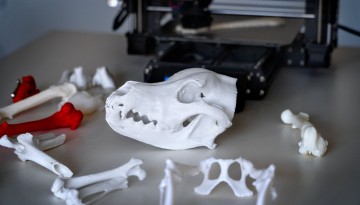
First-year veterinary student Sean Bellefeuille’s startup creates anatomical models of animals with a 3D-printer. These models help veterinary surgeons better prepare for surgery on their patients.
The Plant Science Research Network presents an action plan for its researchers to maximize their impact on pressing global issues such as human health and climate change.
The history of superconducting materials has been a tale of two types: s-wave and d-wave. Now, Cornell researchers have discovered a possible third type: g-wave.
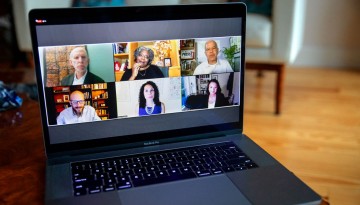
Four faculty experts kicked off the College of Arts and Sciences’ yearlong “Racism in America” webinar series with a Sept. 16 discussion about policing and incarceration.
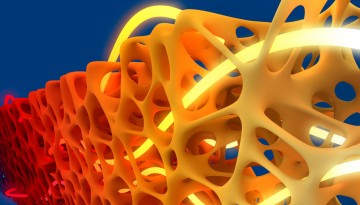
A Cornell researcher is developing a technique for precise fabrication of porous ceramic materials, opening a new realm of possibilities for their application in industrial and biomedical products.
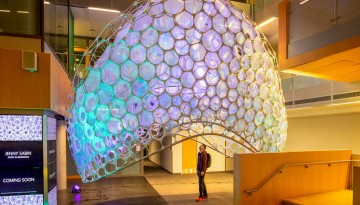
Faculty from the College of Architecture, Art and Planning explored resilient architecture through technological innovation and from multiple perspectives at FABRICATE 2020, a four-day online conference.
There isn’t one unified Asian American vision of California, argues Christine Bacareza Balance, associate professor of Performing and Media Arts, in “California Dreaming,” a multi-genre collection she co-edited.
A rocky planet orbiting a white dwarf – a star in a phase after death – would present an excellent opportunity to search for molecules that signify life using the James Webb Space Telescope, Cornell researchers write in the Astrophysical Journal Letters.
Susanne Bruyère is co-principal investigator for a National Science Foundation-funded team that is developing artificial intelligence technology to improve employment outcomes for people with autism spectrum disorder.