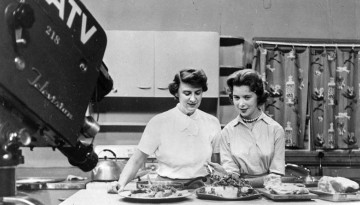
The university beginning online classes for the remainder of the semester continues a long history of remote instruction. Liberty Hyde Bailey and Martha Van Rensselaer designed Cornell’s first correspondence courses in 1896 and 1900, respectively.
A project led by Janis Whitlock, research scientist in the Bronfenbrenner Center for Translational Research, provides a space for people around the world to share stories about life in the age of COVID-19, snapshots that will help researchers understand how people coped during the pandemic.
Transdiagnostic processes, which are subtle ways that people think, act and cope, help explain why mental health problems become more common in girls as they reach puberty, according to new Cornell research.
A biomanufacturing company spun out of Cornell research is seeking to rapidly translate an antibody therapy against COVID-19 by using cell-free biotechnology based on glycoengineered bacteria.
Participants in the Jacobs Technion-Cornell Institute at Cornell Tech’s Runway Startup Postdoc Program presented projects aimed at coping with coronavirus at a virtual demonstration April 1.
Reliance on scientific reasoning, cross-disciplinary collaboration and long research paths are three traits often leading to “big-leap” inventions, a new Cornell study has found.
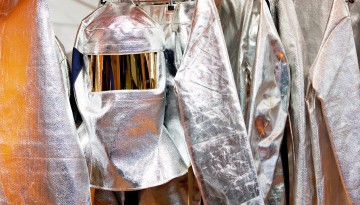
Cornell researchers in fiber science and apparel design are putting their knowledge and energies into keeping health care personnel on the front lines of the COVID-19 pandemic from becoming patients themselves.
Cornell researchers have developed an automated system that uses machine learning, data analysis and human feedback to automatically verify statistical claims about the new coronavirus.