Yunyun Wang ’20, a double major in the College of Arts and Sciences and in the College of Engineering, has been named a Newman Civic Fellow by Campus Compact, a national coalition committed to the public purposes of higher education.
Cornell structural biologists took a new approach to using a classic method of X-ray analysis to capture something the conventional method had never accounted for: the collective motion of proteins.
Forty years after astronomer Carl Sagan helped people explore space through his “Cosmos” television series, a new season of scientific adventures will air on the National Geographic Channel, beginning March 9.
Researchers from Cornell and the Mars Global Food Safety Center can complete whole-genome sequencing to determine salmonella serotypes in two hours and the whole identification process within eight hours.
Projects aiming to combat online harassment of women and improve the computer models used to predict disease were among the five at Cornell to receive 2019-2020 Google Faculty Research Awards.
Most birth control options rely on women to manage, but promising Cornell research from the lab of Paula Cohen, professor of genetics in the College of Veterinary Medicine, may be changing the game by tackling male contraception.
In recent years, researchers in the lab of Hening Lin discovered enzymes that remove chemical modifications – “codes” used for cell signaling – from proteins.
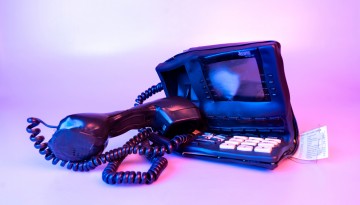
Soil scientist Johannes Lehmann and Nathaniel Stern ’99 collaborated on experimental pyrolysis techniques to “age” modern technology and media – cellphones, laptops, tablets, floppy disks – for Stern’s art exhibit in Milwaukee.