Cornell is joining a collaboration of 36 colleges and universities committed to building the field of public interest technology and preparing a generation of civic-minded technologists.
The Roper Center for Public Opinion Research at Cornell recently announced its first partnership with a major public library system, providing access to its archive of poll questions through the America’s Voice Project.
Cornell researchers have found a new species of soil bacteria – which they named after their late colleague, who first discovered it – that is particularly adept at breaking down organic matter.
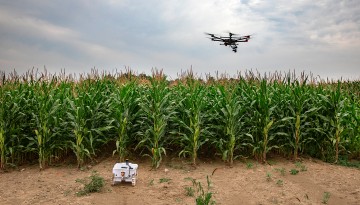
Students and faculty from the world’s five leading agricultural universities, including Cornell, will spend three days learning and brainstorming at the Cornell Initiative for Digital Agriculture’s second annual hackathon, Feb. 28-March 1.
Wojtek Pawlowski, associate professor of plant breeding and genetics, is partnering with French biotech company Meiogenix, with the goal of more effectively engineering maize, the world’s top staple crop.
Sergio Garcia-Rios, assistant professor of government and Latina/o studies, is leading Univision’s polling of Latino voters through the 2020 election cycle.
Sales representatives’ “detailing” visits increased drug firm revenues but did not improve prescribing quality, according to a study co-authored by Colleen Carey, assistant professor of policy analysis and management.
Quiet rooms and friendly nurses sway hospitals' patient satisfaction scores more than medical quality or survival rates, according a new study by Cristobal Young, associate professor of sociology.
The iconic “pale blue dot” photograph of Earth was taken 30 years ago – Feb. 14, 1990, at a distance of 3.7 billion miles – by the NASA spacecraft Voyager 1 as it zipped toward the far edge of the solar system.