People who sign consent forms feel more trapped, not more empowered, than those who give consent verbally, according to new research by Vanessa Bohns, the Braunstein Family Professor in the ILR School.
A publicly available dataset mapping moves between U.S. neighborhoods in far greater detail than standard public data could improve studies of climate risk, affordable housing and economic opportunity.
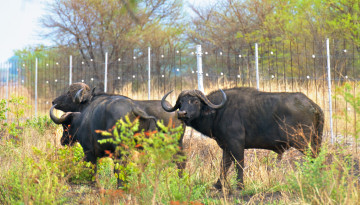
Across parts of southern Africa, fences aim to separate cattle from other animals to prevent the spread of diseases, but they also restrict wildlife migrations.
Four Cornell faculty members are among 99 researchers across the U.S. who have been awarded grants by the U.S. Department of Energy as part of its Office of Science Early Career Research Program.
Psychology researcher Jordan Wylie and colleagues found that artistic excellence, rather than moral excellence, offers greater access to one’s true self, in part because aesthetic pursuits are seen as less rule-bound.
The four-day event, co-sponsored by the Cornell Lab of Ornithology, is expected to attract nearly 1 million participants this year, providing a global snapshot just before migration.
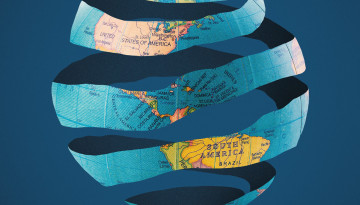
For much of the postwar era, the global economic system was built around a reassuring idea: that shared rules, open markets and international cooperation would smooth shocks, spread prosperity and reduce conflict. Maybe not.
Cornell researchers studying microplastics, robotics and machine learning are recent recipients of National Science Foundation Faculty Early Career Development Awards.