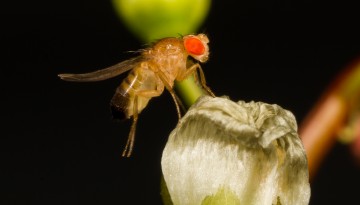
A new study provides an example of asymmetry, a pattern found throughout biology where a pair of organs or appendages that mirror each other have different proportions and may have different functions.
Nozomi Ando, professor of chemistry and chemical biology in the College of Arts and Sciences, has been named a Schmidt Polymath, part of a global cohort of eight scientists and engineers who will each receive up to $2.5 million over five years.
In two recent papers, Cornell researchers identified seven distinct strategies commenters employ when objecting to content online, noting that reputational attacks are most common but that moral appeals are viewed more favorably.
A new decision model derived from business operations detects emerging wildlife disease months earlier, or with lower costs, than the current traditional strategies, according to a collaborative study from the College of Veterinary Medicine.
Suzanne Mettler, Ph.D. ’94, and Trevor Brown, Ph.D. ’25, have co-authored a book detailing the growing political divide between rural and urban America.
There’s no place like home — and even when state-by-state income tax disparities make it profitable to move, high-wage earners seem to agree, according to new Cornell-led research.
A new innovation from Cornell researchers lowers the energy use needed to power artificial intelligence – a step toward shrinking the carbon footprints of data centers and AI infrastructure.