TRAPPIST-1 e, an Earth-sized exoplanet 40 light years away, may have an atmosphere that could support having liquid water on the planet’s surface in the form of a global ocean or icy surface.
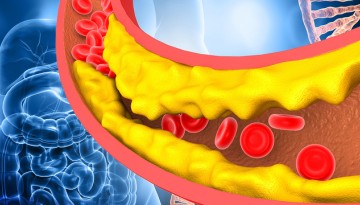
Cornell researchers have uncovered the surprising role played by a “three-tailed” fat molecule in cellular survival during heart attack and stroke: protecting the cells against damage when oxygen runs out.
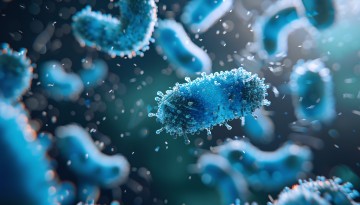
Helping to combat the rising threat of antibiotic resistance, Cornell biologists have identified a surprising mechanism that weakens bacteria from within—an insight that could guide the next generation of antibiotics as drug resistance rises worldwide.
The study found heart failure rates were higher in flooded areas, especially in New Jersey, and that the risk persisted for four to five years – not just weeks or months – after the storm.
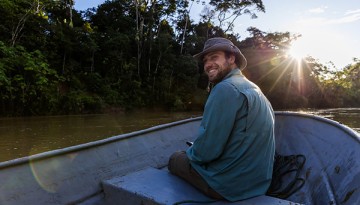
Ethan Duvall, an inaugural Semlitz Family Sustainability Fellow, has launched a nonprofit aimed at protecting biodiversity and culture in the Amazon Rainforest. Among their on-the-ground initiatives, they are working alongside local and Indigenous communities to strengthen green economic initiatives.
An experimental vineyard at the Cornell Lake Erie Research and Extension Laboratory is becoming the university’s first living laboratory of precision, autonomy and sustainability, supporting the grape industry in New York and Pennsylvania.
A Cornell-led collaboration developed microscale magnetic particles that can mimic the ability of biomolecules to self-assemble into complex structures, while also reducing the parasitic waste that would otherwise clog up production.