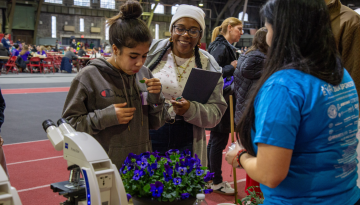
From drones that monitor crop health to plants that send text messages, middle and high school students at Cornell’s Expanding Your Horizons conference experienced firsthand how plant science and technology are shaping the future of agriculture on April 5 in Barton Hall.
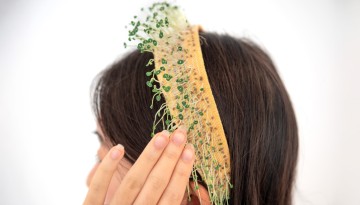
Researchers in the College of Human Ecology have developed a design and fabrication approach that treats plants as companions to humans, with seeds woven into hydrogel material for apparel and other applications.
Cornell Tech leadership, alongside elected officials, faculty, students, staff, and the Roosevelt Island community, hosted an official ribbon-cutting ceremony to celebrate the opening of the campus’s new MakerLAB on May 2.
Cornell researchers found that by prioritizing the perspectives of white Americans instead of those from underrepresented groups, studies of pandemic disparities likely missed important insights from those most affected by COVID-19.
A team of researchers at Cornell University have made a discovery in fruit flies that could change the way we understand brain diseases like Alzheimer’s and Parkinson’s in humans.
Teams of health care providers called Accountable Care Organizations participating in the Medicare Shared Savings Program have saved Medicare between $4.1 billion and $8.1 billion from 2012–2019, according to a new study from Weill Cornell Medicine investigators.
The rating system is the first of its kind and may help urban planners and robotics companies plan for future robot deployments that won’t disrupt existing sidewalk environments.
New Cornell research reveals that social media users with disabilities prefer more personalized content moderation powered by AI systems that not only hide harmful content but also summarize or categorize it by the specific type of hate expressed.