Researchers at Weill Cornell Medicine have developed a pre-clinical model of the leading cause of central vision loss in older individuals, dry age-related macular degeneration, and used it to identify new treatment modalities and drug targets.
The Division of Nutritional Sciences and partner RTI International won a five-year, $23 million award to coordinate research for the NIH’s Nutrition for Precision Health study.
A study also revealed that expanded duties, particularly emotional care, resulted in a higher perceived value of the workers’ contributions, which could help boost pay for home care workers.
Professors Neil Lewis Jr. ’13 and Tashara Leak are leading the new Action Research Collaborative, which will serve as an institutional hub for cross-campus action research collaborations between Ithaca and New York City, and elsewhere.
While the world has celebrated the arrival of highly effective vaccines against COVID-19, new work by researchers at Weill Cornell Medicine and the University of Oxford shows that even unrelated vaccines could help reduce the burden of the pandemic.
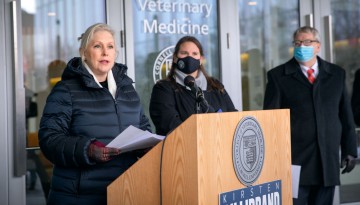
U.S. Sen. Kirsten Gillibrand (D-New York) visited the College of Veterinary Medicine on Jan. 7 to discuss bipartisan legislation proposing to establish centers of excellence for pandemic response and prevention.
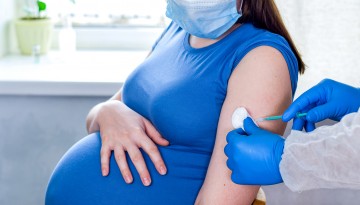
COVID-19 vaccination of expectant mothers elicits levels of antibodies to the SARS-CoV-2 outer “spike” protein at the time of delivery that don’t vary dramatically with the timing of vaccination during pregnancy and thus don’t justify delaying vaccination, according to a study from researchers at Weill Cornell Medicine.
Utilizing a test strip and small reader that return results in minutes, a faculty team’s proof-of-concept test could improve access by enabling more screening in community settings.
Aggressive and relatively common lymphomas called diffuse large B cell lymphomas have a critical metabolic vulnerability that can be exploited to trick these cancers into starving themselves, according to a study from Cornell researchers.