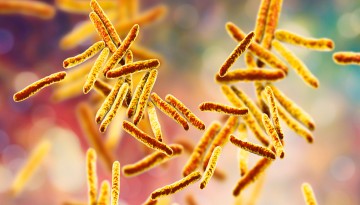
Mycobacterium tuberculosis, the hardy bacterial species that causes tuberculosis, has an unexpected vulnerability that future drugs may be able to exploit, according to a study from researchers at Weill Cornell Medicine.
Following a sweeping effort in 2019 to address clinical care team well-being across Weill Cornell Medicine, physicians note a reduction in stress and feelings of burnout compared to previous surveys, according to a new report from the institution.
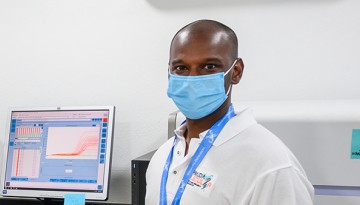
Cornell connections led virology scientist and MBA grad Pradeep Ambrose to help Bermuda grapple with a COVID surge and serve as interim science advisor.
Animal Science Professor Xingen Lei has been named a Fellow of the National Academy of Inventors, in recognition of his groundbreaking work on livestock phosphorus nutrition that improves global animal agriculture, preserves non-renewable phosphorus, and protects the environment.
An alternative statistical method honed and advanced by Cornell researchers can make clinical trials more reliable and trustworthy while also helping to remedy what has been called a “replicability crisis” in the scientific community.
Weill Cornell Medicine researchers are using machine learning, a form of artificial intelligence, to shed light on genetic mutations associated with spina bifida.
Building on their longtime commitment to social justice, equity and diversity, Louise and Leonard Riggio have made a $5.6 million gift to Weill Cornell Medicine to establish a scholarship for Black medical students with financial need.
Depleting copper levels may reduce the production of energy that cancer cells need to travel and establish themselves in other parts of the body by a process referred to as metastasis, according to a new study by investigators from Weill Cornell Medicine and Memorial Sloan Kettering Cancer Center.
Home health care workers often suffer from poorer physical and mental health, when compared with similar low-wage frontline workers, according to new research by Weill Cornell Medicine.