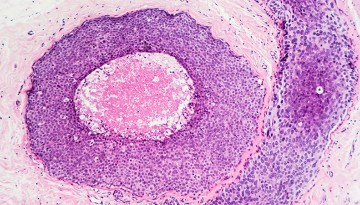
Researchers at Weill Cornell Medicine have identified significant differences in the molecular characteristics of tumors from younger and older cancer patients across several cancer types.
Cornell BrAIn, initiated and led by the College of Arts & Sciences, will host a two-day symposium Dec. 9-10, bringing together innovators in Artificial Intelligence (AI) and neuroscience.
Pound for pound, the brain consumes vastly more energy than other organs. Now, researchers at Weill Cornell Medicine have found that the process of packaging neurotransmitters may be responsible for this energy drain.
A gene mutation linked to Alzheimer’s disease alters a signaling pathway in certain immune cells of individuals with the disease, according to a new study by scientists at Weill Cornell Medicine.
For physician and epidemiologist Dr. Jay Varma, the COVID-19 pandemic underscores not only the importance of public health, but also the powerful and pressing role of governments, academic medical centers and other organizations to work together on emerging health threats.
A group of immune cells that normally protect against inflammation in the gastrointestinal tract may have the opposite effect in multiple sclerosis and other brain inflammation-related conditions, according to a new study by Weill Cornell Medicine researchers.
Antibody protection against harmful forms of fungi in the gut may be disrupted in some patients with Crohn’s disease – a condition caused by chronic inflammation in the bowel – according to a new study by Weill Cornell Medicine investigators.
Weill Cornell Medicine has received a $1.27 million grant from the United States Department of Defense to develop treatment for a rare but devastating eye condition largely affecting military personnel who suffer traumatic eye injuries in combat.
Zinc deficiency is prevalent around the world, and among children, these mineral shortfalls can lead to stunting, embryonic malformations and neurobehavioral abnormalities.