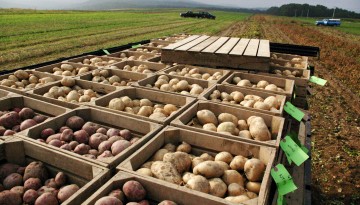
Cornell's 160-year-old potato breeding program supports the national potato industry, working hand-in-hand to develop new varieties grown across the country.
Youth in Cornell Cooperative Extension of Erie County's 4-H Livestock Program are learning marketing skills along with lessons in animal husbandry and business planning.
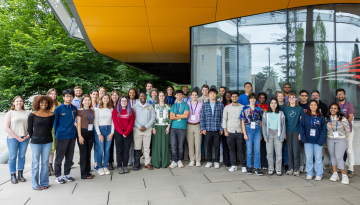
Over the summer, thirteen undergraduates from across the country came to Ithaca to participate in the Center for Research on Programmable Plant Systems’ Research Experience for Undergraduates to work on interdisciplinary projects in digital biology, from gene delivery to automation of plant tissue protocols.
Proactive outreach and Cornell’s tradition of supporting military service have helped grow the number of cadets and midshipmen joining the Tri-Service Brigade this year.
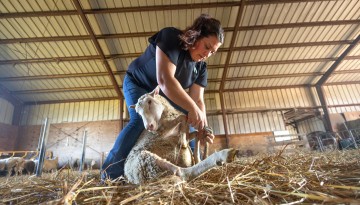
With funding from New York state, PRO-LIVESTOCK aims to support the region's livestock farmers, beginning with cattle, goat and sheep farmers, and two new hires have been traversing New York to spread the word.
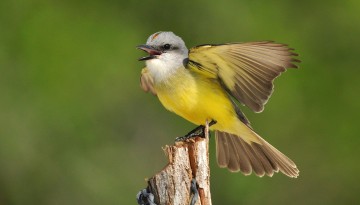
The Cornell Lab of Ornithology and its eBird program, a participatory-science platform in which anyone around the world can submit bird sightings and sounds for scientists to use in research, recently hit a pair of major milestones.