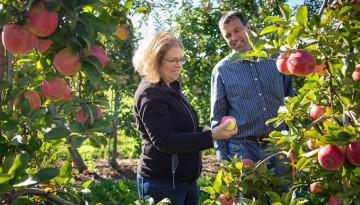
This fall, apple lovers can look forward to three new varieties from the oldest apple breeding program in the U.S. — located at Cornell AgriTech in Geneva, New York, part of the College of Agriculture and Life Sciences.
This year’s 76West Clean Energy Competition featured three Cornellian-led startups that could potentially generate economic development in the Southern Tier with clean-energy technology.
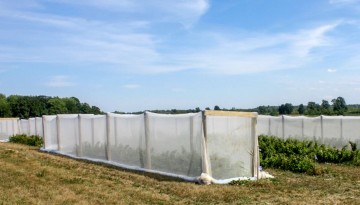
The effectiveness of exclusion netting in protecting New York state's berries from the invasive spotted wing drosophila is documented in new research from Greg Loeb, professor of entomology at Cornell AgriTech.
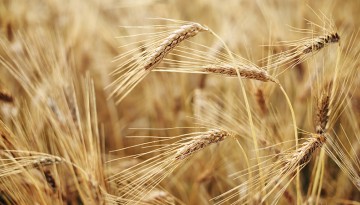
Scientists will gather virtually Oct. 7-9 for the Borlaug Global Rust Initiative’s virtual technical conference to discuss strategies to safeguard the health of wheat, one of the planet’s most important food sources.
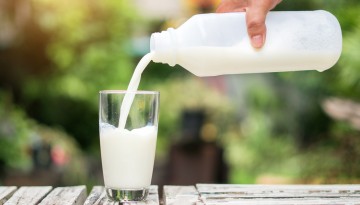
Cornell has awarded Stewart’s Dairy in Saratoga Springs top honors in New York state’s annual fluid milk competition, conducted on behalf of the New York State Department of Agriculture and Markets.
Craving a fruit smoothie, but don’t want to haul out the blender? Cornell’s food product development team created Smoothie Bites, which won a national contest.
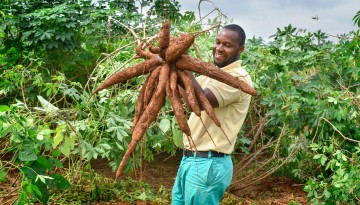
Scientists in Cornell’s NextGen Cassava project have uncovered new details regarding cassava’s genetic architecture that may help breeders more easily pinpoint traits for one of Africa’s key crops.
Since requesting proposals in April, the Cornell Atkinson Center for Sustainability has awarded approximately $250,000 in rapid-response grants for COVID-19-related Cornell research.
Cornell researchers are leading a review on the risk of coronavirus transmission through breast milk intake and breastfeeding, to inform WHO guidelines during the pandemic.