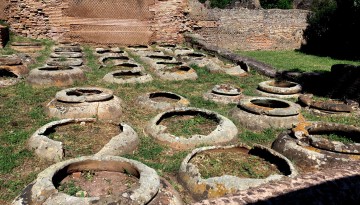
Classics professor Astrid van Oyen's new book is an archaeological study of Roman socio-economics, and how storage could make or break farmers and empires alike in the pre-industrial world.
Cornell has earned a platinum sustainability rating – the top status – from an international group that tracks environmental stewardship for over 1,000 college campuses.
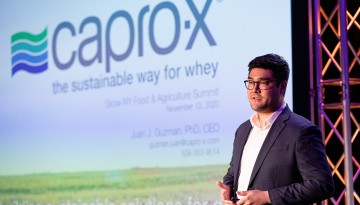
Capro-X, a startup that repurposes dairy waste and began in Cornell Engineering’s Commercialization Fellows program, has received a $724,000 National Science Foundation Phase II award.
Through a partnership between the Cornell Atkinson Center for Sustainability and EDF, four Cornell faculty members have received new grants for regional sustainability projects with global implications.
Virtual events at Cornell include a Russian conversation series; trainings on racism and allyship; a Congressional Black Caucus panel; a COVID-19 bereavement support group and live Alliance for Science talks.
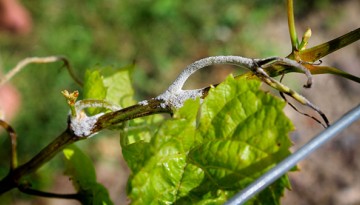
A project led by Kaitlin (Katie) Gold, assistant professor of plant pathology and plant microbe-biology at Cornell AgriTech, to study grape downy mildew has received a $100,000 USDA Specialty Crop Block Grant.
Sen. Kirsten Gillibrand told New York farmers that the pandemic has exposed societal faults, including food insecurity and food supply chain weakness, at an online town hall meeting hosted by Cornell.
Kathryn Boor ’80, the Ronald P. Lynch Dean of the College of Agriculture and Life Sciences and a professor of food science, has been named dean of the Graduate School and vice provost for graduate education, Provost Michael Kotlikoff announced June 8.
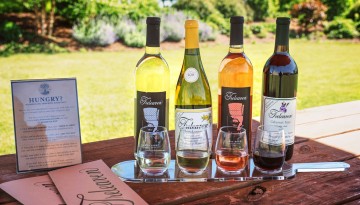
The tasting rooms of New York state’s craft beverage industry are beginning to open up, as Cornell held a webinar on how to do that safely in the era of COVID-19.