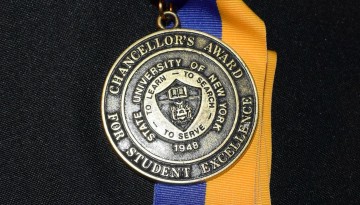
Sixteen faculty and professional staff members in state contract colleges at Cornell are receiving the 2019-20 State University of New York Chancellor’s Awards for Excellence.
The second Grow-NY food and agriculture business competition is going on as planned, with new safety practices in light of the COVID-19 pandemic, organizers and state officials said May 14 during a virtual briefing.
A team of Cornell students found an artful way to snare the sun’s energy and optimize it for the U.S. Department of Energy’s inaugural Solar District Cup collegiate design competition.
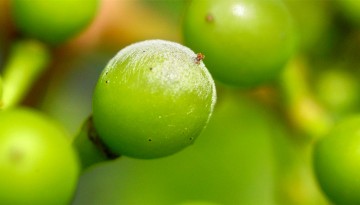
Robots fitted with ultraviolet light lamps that roam vineyards at night are proving effective at killing powdery mildew, a devastating pathogen for many crops, including grapes.
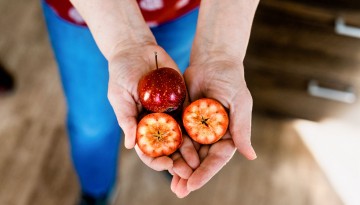
Innovative plant breeders at Cornell’s College of Agriculture and Life Sciences are creating new fruits and vegetables that wow consumers, have longer growing seasons and are more resistant to diseases, insects and weather.
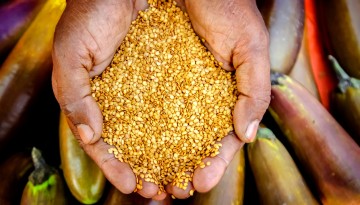
Farmers in Bangladesh achieved significantly higher yields and revenues by growing insect-resistant, genetically engineered eggplant, a new Cornell study has found.
One moment, you have a bowl of creamy chocolate liquid. Then, in an instant, it’s ice cream. Forget hocus-pocus: This is physics, engineering and a new Cornell patent.
Ecologist and conservation biologist Amanda Rodewald studies birds and the ecosystems on which they depend, looking for the best outcomes for people and the planet. This approach turned her attention to coffee farms.