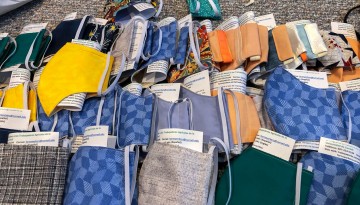
To help protect farmworkers and slow the spread of COVID-19 in rural New York, the Cornell Farmworker Program is mobilizing local support to make and distribute face masks across the state.
A Cornell faculty member is part of a core team that has organized the Tompkins County COVID-19 Food Task Force, a nerve center working to ensure that those in need have access to food and that food producers stay in operation during the crisis.
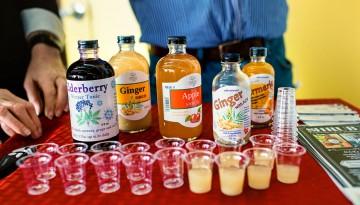
Cornell AgriTech’s Center for Excellence for Food and Agriculture has been helping food and ag businesses adapt to the COVID-19 economy with new marketing strategies and by diversifying products.
A Cornell researcher is part of a multi-institution team helping upstate New York organic farmers grow and increase profitability of perennial grain crops, which can be planted once and will yield grain for multiple years.
Peptides found in the Asian citrus psyllid, which feeds on the leaves of citrus trees and spreads a bacteria that causes citrus greening disease, could lead to development of a new pesticide.
The Genomic and Open-source Breeding Informatics Initiative, operating under an $18.5 million grant from the Bill & Melinda Gates Foundation, is working to develop new plant-breeding tools and genomic databases.
Applications are now open for Year 2 of Grow-NY, the food and agriculture business competition administered by Cornell's Center for Regional Economic Advancement and funded by Empire State Development.
Cornell Atkinson is calling for proposals for faculty research related to the global COVID-19 pandemic. The center’s Rapid Response Fund will award seed grants of up to $10,000 for projects.