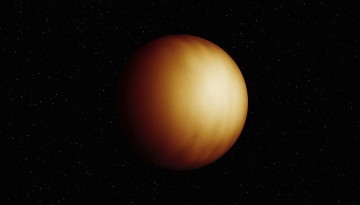
Astronomers have generated the first three-dimensional map of a planet orbiting another star, revealing an atmosphere with distinct temperature zones – one so scorching that it breaks down water vapor, a team co-led by a Cornell expert reports in new research.
Newly published digital collections at Cornell University Library explore areas of Cornell history. Freely accessible online, the three new collections were digitized from materials held in Cornell University Library’s Rare and Manuscript Collections.
A Cornell research group has developed a cyclodextrin-based fibrous membrane that in lab testing removed approximately 90% of aqueous triclosan, an antibacterial agent that poses a threat to aquatic organisms.
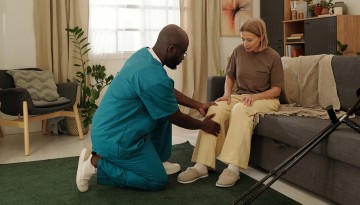
A doctoral student has developed a text message-based system that regularly updates both long-term hospital patients’ and care facilities’ availability statuses, smoothing a normally time-consuming placement process.
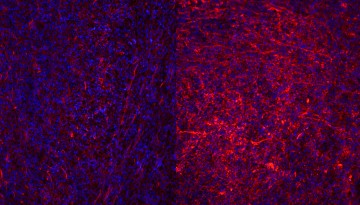
Cellular changes that appear during melanoma and lead to treatment resistance can be reversed with drugs – potentially opening the door to new or more effective treatments for the deadly disease, according to new Cornell research.
Researchers at Cornell Tech and Cornell Bowers engaged directly with 15 content moderators on Reddit to see exactly how they try to preserve the news sharing site's humanity in an increasingly AI-infused world.
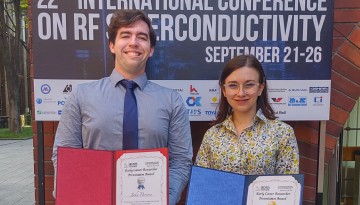
Cornell graduate students Nicole Verboncoeur and Jake Parsons earned 1st and 2nd Prize awards at SRF2025 in Tokyo for outstanding research in superconducting radio-frequency technology.
Art infusion theory – the idea that displaying art in retail settings can positively impact consumer behavior – can be applied to the metaverse with similar results, a Cornell design researcher has shown.