Neuroscientist Antonio Fernandez-Ruiz has received a New Innovator Director’s Award from the National Institutes of Health’s High-Risk, High-Reward Research program.
A survey of New York state residents by College of Veterinary Medicine researchers found that nearly half of respondents increased the amount of time they spent on wild and backyard food and related activities early in the pandemic.
Researchers from the Cornell Lab of Ornithology and the Institute for Computational Sustainability are using big data and AI to model hidden patterns in nature – not just for one bird species, but for entire ecological communities across continents.
Vesna Bacheva, recipient of a 2023 Schmidt Science Fellowship, collaborates with CROPPS to pioneer innovative technologies and models aimed at investigating the signaling and nutrient transport processes within plants.
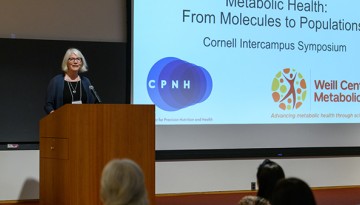
On Sept. 11 and 12, nearly 100 researchers from the Ithaca Campus and the Weill Cornell Medicine Campus in New York City came together for the symposium, Metabolic Health: From Molecules to Populations.
An American Heart Association Presidential Advisory, co-authored by Mario Herrero, professor in global development, calls for building on existing research and implementing cross-sector approaches to Food Is Medicine.
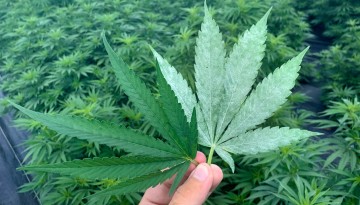
Researchers have discovered a gene in hemp that helps the plant resist powdery mildew, giving the fledgling hemp industry a new tool to combat the prevalent disease.
The work aims to understand how stem cells function to fuel normal tissue maintenance and to repair injuries in actively regenerative tissues, such as skin.
Researchers tracked the brain’s dopamine reward system and found – for the first time – this system flexibly retunes toward the most important goal when faced with multiple competing needs.