Lecturer Barbara Meyer has "made exciting discoveries regarding how disruptions in proper gene expression can have dramatic consequences in organism development and health as well as impact aging and lifespan.”
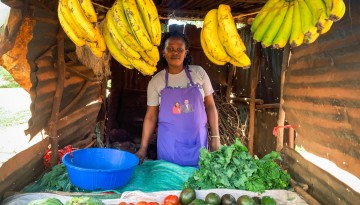
A new project seeks to develop methodologies to assess food environments in two Kenyan cities, understand the role of informal vendors and offer guidance on how to measure the rapidly changing food environments.
New research used engineered mice to compare SARS-COV-2 omicron subvariants, and found one of them, BA.5, was more virulent likely due to its ability to rapidly replicate early during infection.
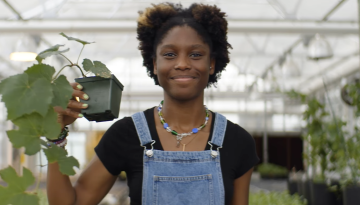
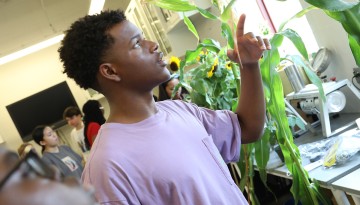
The CATALYST Academy engineering program at Cornell teamed up with CROPPS to discover how engineering and technology play major roles in plant science and agriculture.
Professors Galina Hayes (College of Veterinary Medicine) and Sheri L. Johnson (Law) have each won Cornell’s highest honor for teaching and academic advising in programs that lead to an advanced degree.
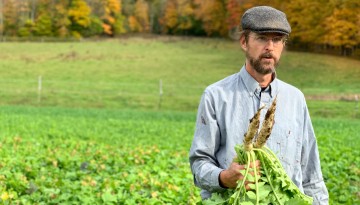
A survey of farmers in four Northeast states, including New York, found that incentive payments encouraged participants to plant twice as many acres of cover crops as they did prior to receiving funds – a change that can both improve their farms and mitigate climate change.
The Mildred Cohn Young Investigator Award recognizes Nozomi Ando's advances in diffuse scattering and her dedication to diversity, equity, and inclusion in STEM.