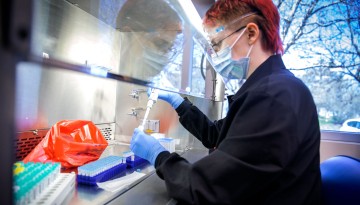
Robust collaboration between community partners and Cornell has resulted in more than 2 million COVID-19 tests, saving lives throughout the Finger Lakes region.
Found in a glue trap meant to capture insects, the small bird was taken to Cornell’s Janet L. Swanson Wildlife Hospital after its rescuers attempted to free the creature from the powerful adhesive.
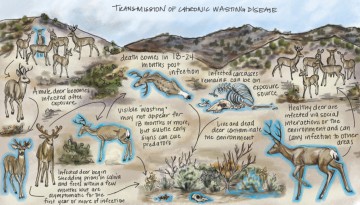
Veterinary student Laura Donohue is blending her artistic talents and passion for animals in more than 100 illustrations for a new book on wildlife health and disease in conservation.
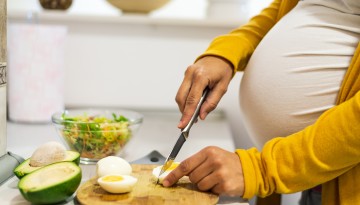
The nutrient choline – shown to have long-term benefits for children whose mothers consume it during pregnancy – also helps the body more efficiently use an omega 3 fatty acid that is essential for fetal development.
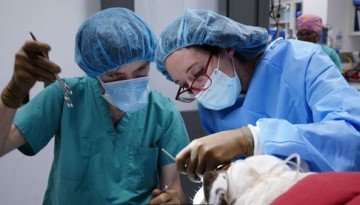
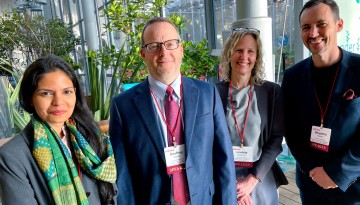
The American College of Veterinary Surgeons – the specialty board that certifies veterinarians in large and small animal surgery – recognized Dr. Nicole Buote as an ACVS Founding Fellow, Minimally Invasive Surgery (Soft Tissue).
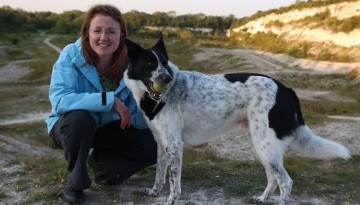
Dr. Sarah Caddy joined the College of Veterinary Medicine as assistant professor with the Baker Institute for Animal Health and in the Department of Microbiology and Immunology.
Declaring this the “decisive decade” for climate action, Cornell launched The 2030 Project: A Climate Initiative, which will mobilize world-class faculty to develop and accelerate tangible solutions to the climate challenge.
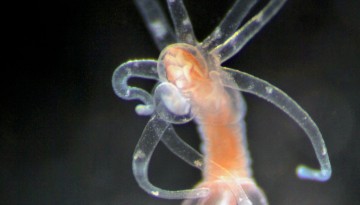
The cnidocytes – or stinging cells – that are characteristic of sea anemones, hydrae, corals and jellyfish, are also an excellent model for understanding the emergence of new cell types, according to new Cornell research.