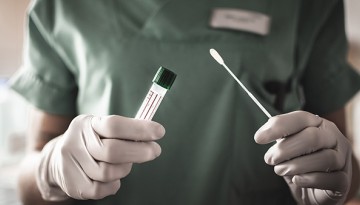
Nasopharyngeal swabs – taken from far back inside the nostril – were found to be more effective at detecting COVID-19 than saliva tests or swabs just inside the nostril or under the tongue.
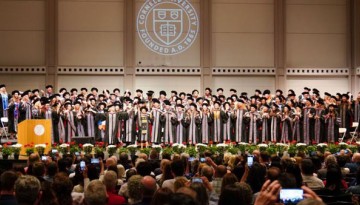
Graduating students with the Cornell University College of Veterinary Medicine celebrated with family, friends, faculty and staff at commencement week events.
More than 99% of 474 veterinarians surveyed said they’d encountered useless or nonbeneficial veterinary care in their careers, according to a new Cornell-led study that documents the prevalence of futile care for the first time.
In Medellin, Colombia, low-income residents who lived in close proximity to new public transit stations had increased rates of mosquito-transmitted dengue fever, according to a new study.
The discovery made by two doctoral students could have future implications for human health, setting a path for research into understanding brain function.
Scientists at the College of Veterinary Medicine are one step closer to understanding the genetic predispositions behind congenital idiopathic megaesophagus.
Cornell startup Antithesis Foods and Bactana were awarded NSF small-business grants, as Guard Medical raises $11 million in Series B investments and C2i launches a disease test in Europe.