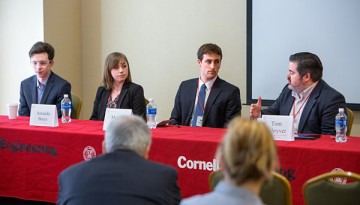
Cornell’s network of business incubators and accelerators have developed into a growing and robust entrepreneurial engine nurtured with resources, training and mentorship that help faculty, research staff and graduate students launch marketable ideas and technologies.
By helping students think like entrepreneurs, programs like the Commercialization Fellows program in the College of Engineering can add another crucial level of practical knowledge to graduate student training.
Some exoplanets – planets from beyond our own solar system – have a direct line of sight to observe Earth’s biological qualities from far, far away, according to research led by Lisa Kaltenegger, director of the Carl Sagan Institute.
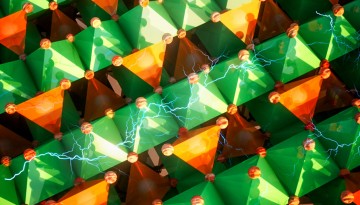
An interdisciplinary team’s work will help researchers who are custom-tailoring the properties of metal oxides in technologies such as lithium ion batteries, fuel cells and electrocatalysis.
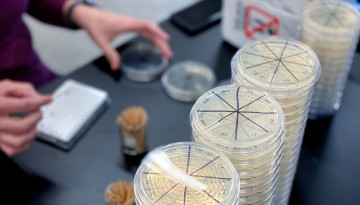
A U.S. Department of Energy agency has awarded $1 million to Cornell researchers, who are using programmed microbes to mine rare-earth minerals used in consumer electronics and advanced renewable energy.
Human tracks at White Sands National Park record more than 1.5 kilometers of a journey and form the longest Late Pleistocene-age double human trackway in the world.
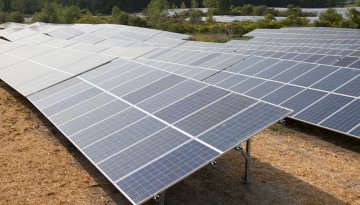
Engineering professor Max Zhang has been awarded a NYSERDA grant to determine efficient solar farm array configurations so the state can avoid land-use conflicts or spoiling precious agricultural space.
The Carl Sagan Institute is getting a boost from an unexpected source: Fiat Chrysler Automotive. The company’s ad for its new Wrangler 4XE plug-in hybrid features the late astronomer Carl Sagan’s famous “Pale Blue Dot” monologue and images.
The Office of Engagement Initiatives recently awarded Engaged Curriculum Grants to 19 teams of faculty and community partners that are developing community-engaged learning courses, majors and minors across the university.