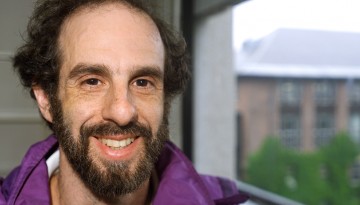
Robert Howarth has been appointed to the new Climate Action Council, created to bring about New York’s path to reach net zero greenhouse gas emissions and support green energy.
A collaboration led by Patrick Reed has discovered the right combination of factors to enable a four-satellite constellation that maintains nearly continuous 24/7 coverage of almost every point on Earth.
Renerva, a medical startup developing an injectable gel to speed the healing of damaged nerves and creating a nerve-graft product, has joined Cornell’s McGovern Center.
Paul Ginsparg, Ph.D. ’81, professor of physics and information science, is the recipient of the American Institute of Physics 2020 Karl Taylor Compton Medal for Leadership in Physics.
Dmitry Savransky, assistant professor of mechanical and aerospace engineering, is a co-investigator on a $2.6 million National Science Foundation grant aimed at the discovery of relatively young, large exoplanets.
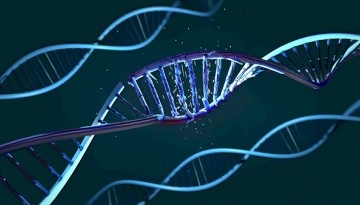
New Cornell-led research has found a strong connection between DNA damage triggered by mutations in proteins that surround the cell nucleus, known as lamins, and muscular dystrophy.
A Cornell-led collaboration has created a new material that will bring clarity and extra bandwidth to the next generation of cellphones and other high-frequency electronics.
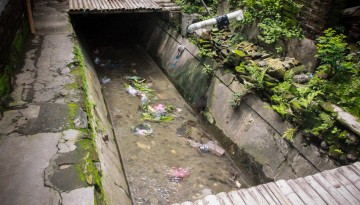
Cities in the “global south” – densely populated urban areas that are part of low-income countries in Asia, Africa and Latin America – should phase out pit latrines, septic tanks and other on-site methods of human waste management, according to a Cornell researcher.