Cornell’s Public Voices Thought Leadership Fellowship Program seeks to increase the public impact of top underrepresented thinkers in the U.S. and to help them contribute to public conversations.
The university launched the Cornell Institute of Host-Microbe Interactions and Disease, an organization that connects the community of Cornell researchers studying host-microbe biology and disease.
Using a novel approach for computing real-time game strategy, engineers have developed an artificial Ms. Pac-Man player that chomps the existing high score for computerized play.
Study probes how DNA unwrapping and the release of protein are linked inside the macromolecular complex known as the nucleosome core particle, which could inform therapeutic strategies for cancer.
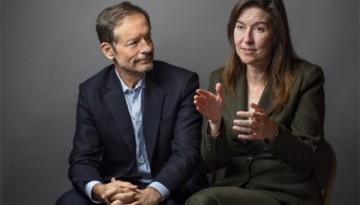
Lewis C. Cantley and Kristy Richards are growing radically collaborative research connections between Weill Cornell Medicine and the College of Veterinary Medicine.
Contrary to their own scientific intuition, Cornell researchers found that the body size of intertidal oysters went unchanged after the Deepwater Horizon oil spill disaster in the Gulf of Mexico.
Cornell and Weill Cornell Medicine researchers report on the use of biomaterials-based organoids in an attempt to reproduce immune-system events and gain a better understanding of B cells.
Astronomers have uncovered the cosmological source of a "fast radio burst." Once thought to emanate from within the Milky Way galaxy, the bursts come from 3 billion light-years away.
A Cornell research group reports that a mechanical factor - stiffening of a cancer cell and its matrix - and not a chemical cause could contribute to metastasis in some forms of cancer.