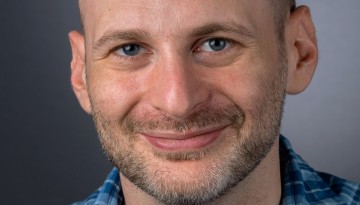
Noah Stephens-Davidowitz, assistant professor of computer science at Cornell Bowers CIS, has been named a Packard Foundation Fellow for his work in theoretical computer science and cryptography.
The annual competition, slated for Nov. 10-13, allows students to work on open-ended real world problems, showcasing the multifaceted nature of applied mathematics.
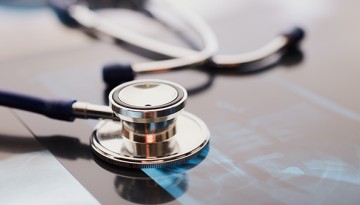
An American Heart Association Presidential Advisory outlines an ambitious plan to increase rigorous research on initiatives aimed at providing food as medicine for chronic conditions.
While pursuing her master’s in apparel design, Tulasi Elangovan, M.A. ’23, researched and designed a prototype for a shoulder pad made especially for female hockey players, with help from members of the Big Red women’s team.
One of the world’s largest crop pathogen surveillance systems is set to expand its capacity to protect wheat productivity in food vulnerable areas of East Africa and South Asia.
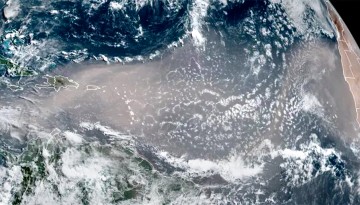
Plant pathogens can hitch rides on dust and remain viable, with the potential for traveling across the planet to infect areas far afield, a finding with important implications for global food security and for predicting future outbreaks.
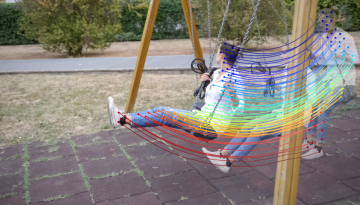
Cornell researchers have developed an optimization tool, OmniMotion, to estimate motion throughout an input video, which has potential applications in video editing and generative AI video creation. It was presented at a conference last week in Paris.
The Green Bank Telescope in West Virginia will soon see a vast expansion of its survey capabilities, thanks to a decadelong effort at Cornell to build an advanced camera that will offer a wide, continuous field of view of the sky.
Two faculty members from Weill Cornell Medicine and one from the College of Veterinary Medicine have been elected to the National Academy of Medicine, one of the highest honors in the fields of health and medicine.