“Up from the Depths,” a new book by history professor Aaron Sachs, tells the interconnected stories of writer and poet Herman Melville and the literary critic and historian Lewis Mumford, who helped revive Melville from obscurity.
A collaboration led by Eun-Ah Kim, professor in the College of Art and Sciences, employed machine learning to analyze a massive dataset from a quantum metal to settle a debate about this material.
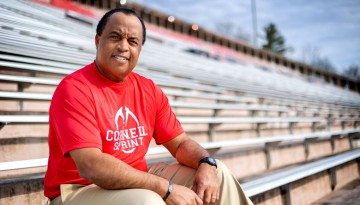
Michael L. Huyghue ’84, a former NFL general manager, has provided recommendations for improving diversity, equity and inclusion in hiring practices and is meeting with each team’s leadership.
A persistent rapid-fire fast radio burst source – sending out a cosmic ping from more than 3.5 billion light years away – helps reveal the secrets of the broiling space between galaxies.
Computing-related retraumatization can be lessened or avoided in a few low- or no-cost ways, according to research co-led by Nicola Dell and Tom Ristenpart of Cornell Tech and the Cornell Ann S. Bowers College of Computing and Information Science.
As the cherished rainforest in South America’s Amazon River region continues to shrink, the river itself now presents evidence of other dangers: the overexploitation of freshwater fish.
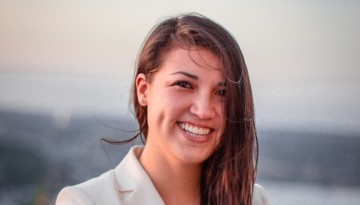
Our 11th episode features Stephanie Wisner ’16, co-founder of Centivax, a therapeutics company that’s creating universal vaccines to reduce and eradicate the remaining complex pathogens of the 21st century.
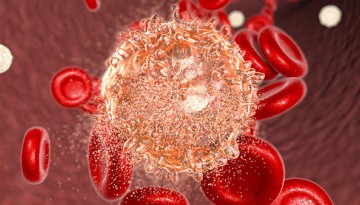
Genetically engineered immune cells successfully target the specific cancer cells that may be responsible for relapse of acute myeloid leukemia, according to a preclinical study by investigators at Weill Cornell Medicine.
Opening June 6, the exhibition curated by the College of Architecture, Art and Planning features work by 20 alumni and faculty as part of ongoing celebrations of the Department of Architecture's 150th year and a century of art education at Cornell.