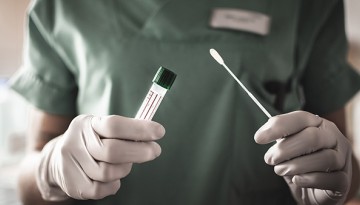
Nasopharyngeal swabs – taken from far back inside the nostril – were found to be more effective at detecting COVID-19 than saliva tests or swabs just inside the nostril or under the tongue.
Solving problems like climate change could require dismantling rigid academic boundaries, so that researchers of various backgrounds may collaborate through an “undisciplinary” approach.
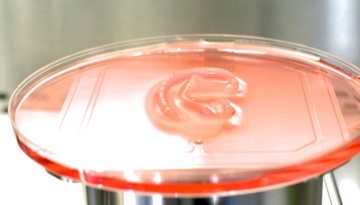
In a first-of-its-kind clinical trial, a human has received a 3D-bioprinted ear implant grown from the patient’s own living cells – thanks to a technology platform developed by a Cornellian-founded startup company.
In Medellin, Colombia, low-income residents who lived in close proximity to new public transit stations had increased rates of mosquito-transmitted dengue fever, according to a new study.
The FutureSounds Festival extended the existing sound world with presentations by guest builders and performers and newly designed instruments and compositions by Cornell students.
The Weill Cornell Medicine research takes a step toward precision medicine for a type of cancer that disproportionately affects people with African ancestry, an underserved population.
The discovery made by two doctoral students could have future implications for human health, setting a path for research into understanding brain function.
Cornell researchers designed a micro-sized artificial cilial system that could eventually enable low-cost, portable diagnostic devices for testing blood samples, manipulating cells or assisting in microfabrication processes.