Researchers studying carbon removal and storage methods and novel additive manufacturing techniques are among the six Cornell faculty members who recently received National Science Foundation Faculty Early Career Development Awards.
A group of international scientists led by Cornell is evaluating how the stratosphere could be made just a little bit brighter, reflecting more sunlight so that Earth maintains its cool.
A new study finds that certain species of bacteria in the gut interact with and help balance levels of dietary cholesterol by using it to create a molecule that plays important roles in human health.
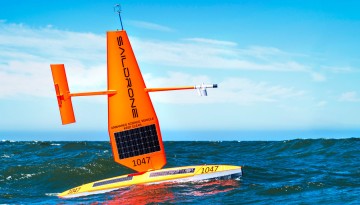
Seafaring drones soon will allow Cornell scientists to examine the abundance and distribution of forage fish – like zooplankton and shrimp – that nourish species higher on the food chain.
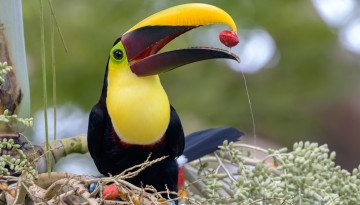
Birds living in tropical mountains have narrow ranges. Why not make use of the whole mountain? A new study finds the dominant influence for their choice has to do with the neighbors.
In a series of research projects and as a designer, Martin Hogue, associate professor of landscape architecture, has explored the history and culture of camping.
The financial stability of providers and their ability to serve patients is being threatened by Wall Street, according to new research co-authored by ILR Professor Rose Batt.
A team led by Greeshma Gadikota from the College of Engineering was named a finalist for a national prize to domestically extract lithium – an essential ingredient for a greening world.