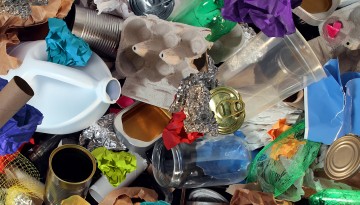
Researchers have discovered a new path for polystyrene, a type of plastic that makes up a third of landfill waste worldwide, that includes being upcycled into benzoic acid - a chemical with wide commercial demand.
Children’s strong drive to share attention has similar effects on language learning across cultures, finds the largest study of early vocabulary development in an Indigenous language.
Attending for-profit colleges causes students to take on more debt and to default at higher rates, on average, compared with similarly selective public institutions in their communities, a Cornell economist finds in new research.
Professional investors shouldn’t ignore the performance of terminated fund managers – the “non-decisions” – when developing confidence in their strategies, says Scott Stewart, MBA ’83, PhD. ’85, clinical professor of finance and accounting at Johnson.
Four doctoral students studying fields in the College of Arts & Sciences are the inaugural recipients of the Zhu Family Graduate Fellowships in the Humanities.
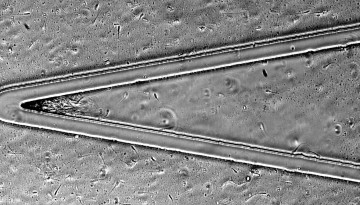
Forget sending bull semen out for complicated laboratory tests to learn whether the agricultural animal is virile. Cornell scientists have developed a faster, easier microfluidics method.
The chapter, "AI and International Politics," is a broad look at the opportunities and risks that the proliferation of AI technology holds for international politics.
An exhibit at the Paleontological Research Institution’s Museum of the Earth in Ithaca – created in collaboration with Cornell entomologists – offers a fascinating education in the diversity of insects and their importance to life on Earth.
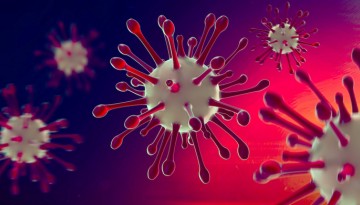
A newly discovered small molecule could be sprayed into people’s noses to prevent COVID-19 illness prior to exposure and provide early treatment if administered soon after infection, according to a study in mice led by Cornell researchers.