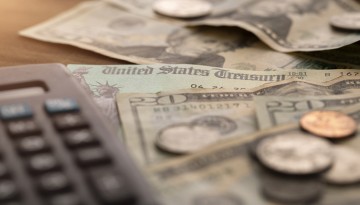
New research from Manoj Thomas, marketing professor at Johnson, and Shreyans Goenka, Ph.D. ’20, finds that low-income conservatives are just as likely as liberals to accept federal assistance, so long as there’s a work requirement.
Faces transmit social information about goals and motivations that can help learners overcome the inherent difficulty of sharing a teacher's visual perspective, new Cornell psychology research finds.
After a European spacecraft rendezvoused with Comet 67P about seven years ago, astronomers now have found a cosmic revelation: It emits molecular oxygen drawn from its nucleus.
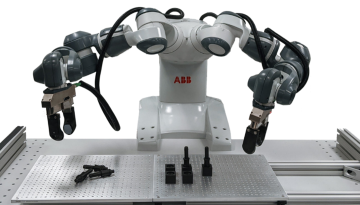
When we think of having our own handy multi-purpose robots, we tend to picture something out of Star Wars or The Jetsons — but the useful technology of the ‘future’ may not be as far off as we think. Maria Bauza Villalonga, PhD student at MIT, hosted a Seminar @ Cornell Tech to show how robots can become our best allies.
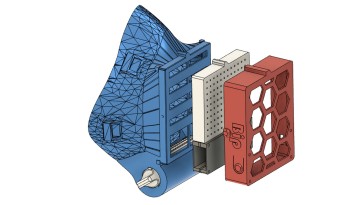
A new 3D-printable mask design, inspired by animal noses, promises easy breathing for users while maintaining similar levels of protection against pathogens found in N95 and surgical masks.
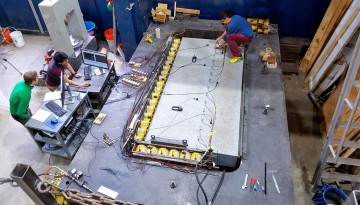
By examining earthquakes in a fresh way, a modeling revelation discovered in the lab by Cornell engineers helps science inch closer to accurate quake forecasts.
Working a nontraditional schedule, and checking in at all hours of the day, night and weekends, is not necessarily beneficial for the 21st-century workforce, according to new Cornell research.
Eleven assistant or associate professors representing four colleges have recently received National Science Foundation Faculty Early Career Development Awards to support their research objectives.
Anesthesiology prices jump significantly after medical facilities contract with corporate physician management companies – especially those backed by private equity firms – and threaten to hike patient costs, according to new research.