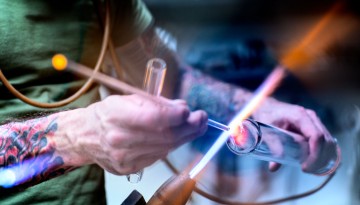
Karl Termini designs, creates and repairs unique scientific glassware, saving departments time and money and ensuring researchers get exactly the equipment they need.
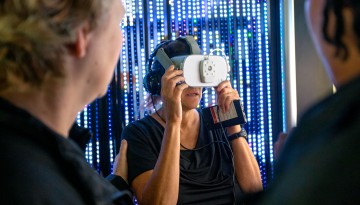
Powering augmented and virtual reality technologies to tackle real-world problems is the focus of a two-year, $1.8 million grant from Meta and Spark AR to Cornell Bowers CIS and Cornell Tech’s XR Collaboratory.
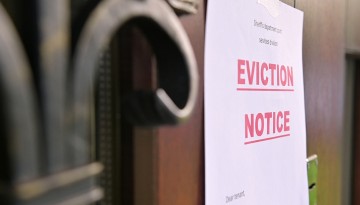
Scholars have overlooked tenant organizations as a crucial source of political power in the most precarious communities, according to new research co-authored by Jamila Michener.
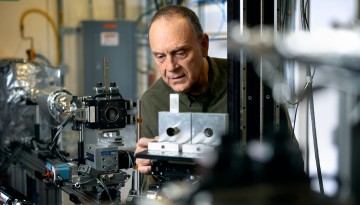
Cornell has been awarded an $8.9 million cooperative agreement from the Air Force Research Laboratory for a regional research hub to spark collaborations in academia, government and industry.
From cell-sized robots to the manipulation of human genes, Arts Unplugged: Science of the Very, Very Small on March 9 will explore nanoscale and quantum innovations shaping our future.
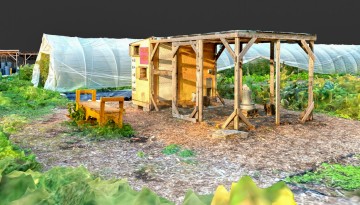
Cornell researchers have created the most advanced virtual reality urban farm tour ever made, an online learning experience that promises to transport urban and rural farmers to New York City’s Red Hook Farms without ever leaving home.
A Cornell Tech clinic has created a new approach to helping survivors of domestic abuse stop assailants from hacking into their devices and social media to surveil and harass them.
Language emerges from a continual flow of creative improvisation, not biologically evolved genes or instincts, Morten H. Christiansen and a co-author argue in a new book, “The Language Game.”
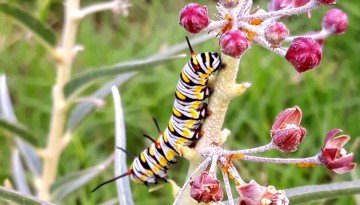
Researchers have identified a species of milkweed that holds promise for planting on roadsides to improve conservation habitat for migrating monarch butterflies.