Using an innovative new imaging technique, researchers at Weill Cornell Medicine have revealed the inner workings of a family of light-sensing molecules in unprecedented detail and speed.
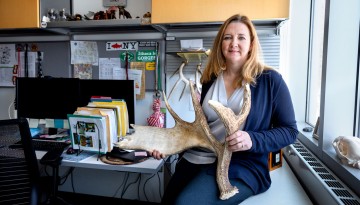
A new study from Cornell University finds that fish are far more likely to communicate with sound than previously thought — and some fish have been doing this for at least 155 million years.
Forget incineration or landfills. To resolve the increasing, never-ending waste stream of medical PPE as a result of the pandemic, Cornell engineers suggest recycling via pyrolysis.
Brooks School of Public Policy Dean Colleen Barry has been elected to a prestigious and influential national organization that seeks to enhance public understanding of Social Security, Medicare, Workers’ Compensation, and Unemployment Insurance and other social insurance programs as well as related policy areas.
Seven Cornell faculty members have been elected fellows of the American Association for the Advancement of Science, the world’s largest general scientific society. This year's fellows, 564 in all, will be honored at a virtual event Feb. 19.
As many as one in four children in Flint, Michigan – far above the national average – may have experienced elevated blood lead levels after the city’s 2014 water crisis, finds new research by Jerel Ezell, assistant professor in the Africana Studies and Research Center.
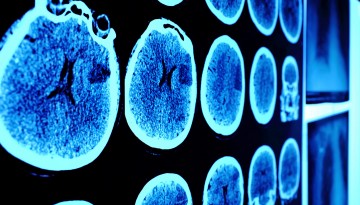
By mapping all the protein interactions of a dementia-linked protein in the brain called Tau, a team of Weill Cornell Medicine investigators has created a road map for identifying potential new treatment targets for Alzheimer’s disease and related dementia.