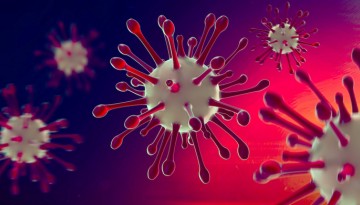
According to a new study from researchers at Weill Cornell, COVID-19 may bring high risks of severe disease and death in many patients by disrupting key metabolic signals and thereby triggering hyperglycemia.
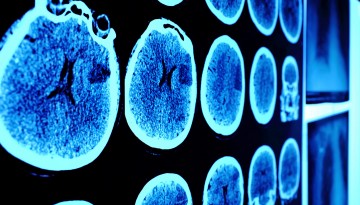
A team of researchers has profiled in unprecedented detail thousands of individual cells sampled from patients’ brain tumors. The findings, along with the methods developed to obtain those findings, represent a significant advance in cancer research.
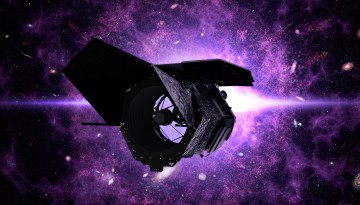
A new Cornell study finds that next-generation telescopes used to see exoplanets could confuse Earth-like planets with other types of planets in the same solar system.
Cornell is one of only seven institutions across the U.S. that will receive a funding award from the National Institutes of Health through a program aimed at increasing minority faculty in the biomedical sciences.
The exhibition at the Herbert F. Johnson Museum of Art explores the visual nature of the “Divine Comedy,” which has inspired scholars and artists from medieval times through today.
Apple juice lovers won’t be left with a bad taste, thanks to a new study that identifies three new bacteria species, one of which fouls up the flavor of the popular drink.
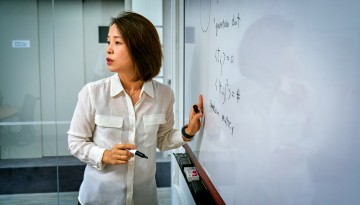
Physicist Eun-Ah Kim is leading the way toward applications of quantum mechanics, including the discovery of new quantum materials and the development of quantum computing.
Astronomer Ray Jayawardhana, the Harold Tanner Dean of Arts and Sciences, is featured in the new PBS NOVA/BBC documentary on neutrinos, “Particles Unknown,” airing Oct. 6.
People can limit the negative impact of email by sending messages that clearly define response expectations, according to a new study from the ILR School.