The collaboration will support cross-institutional scientific partnerships between students and faculty at Cornell and N.C. A&T, a historically Black university that produces more African American engineers than any other university in the United States.
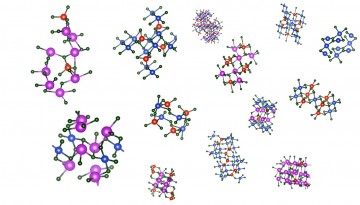
New research from the College of Engineering aims to ease the process of chemical recycling – an emerging industry that could turn waste products back into natural resources by physically breaking plastic down into the smaller molecules it was originally produced from.
A collaboration of researchers led by Cornell has been awarded $22.5 million from the National Science Foundation to continue gaining the fundamental understanding needed to transform the brightness of electron beams available to science, medicine and industry.
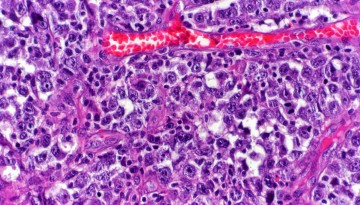
Malignant tumors can enhance their ability to survive and spread by suppressing antitumor immune cells in their vicinity, but a new study has uncovered a way to counter this effect.
An interdisciplinary research team led by Carla Gomes, professor of computing and information science, has developed Deep Reasoning Networks, which combine deep learning with an understanding of the subject’s boundaries and rules.
Paula Cohen, associate vice provost for life sciences, is leading an eight-year, $8 million, multi-institution grant to untangle the complex genetic rulebook for how sperm develops.
Mitigating abuses of encrypted social media communication, on outlets such as WhatsApp and Signal, while ensuring user privacy is the focus of a five-year, $3 million NSF grant to a multidisciplinary Cornell research team.
Galaxie, a 5-year-old black Lab diagnosed with B-cell lymphoma in 2018, is doing well after a rare bone marrow transplant, thanks in part to the care he’s received at the Cornell University Hospital for Animals.
A Baker Institute for Animal Health study finds the antimicrobial properties of certain stem cell proteins could help treat skin infections that are resistant to antibiotics.